Table of contents
Enhance your reading experience—immerse yourself in the adventure with our audio version. Click play and let the sounds of Africa captivate you!
A Zimbabwe safari is a severely underrated experience. It is not the first place to pop up on the repeatedly written safari destination lists, and yet the experiences and ultimately the memories such an adventure will give you will be something you treasure dearly.
Travelling through such an unconventional safari destination will leave you spellbound.
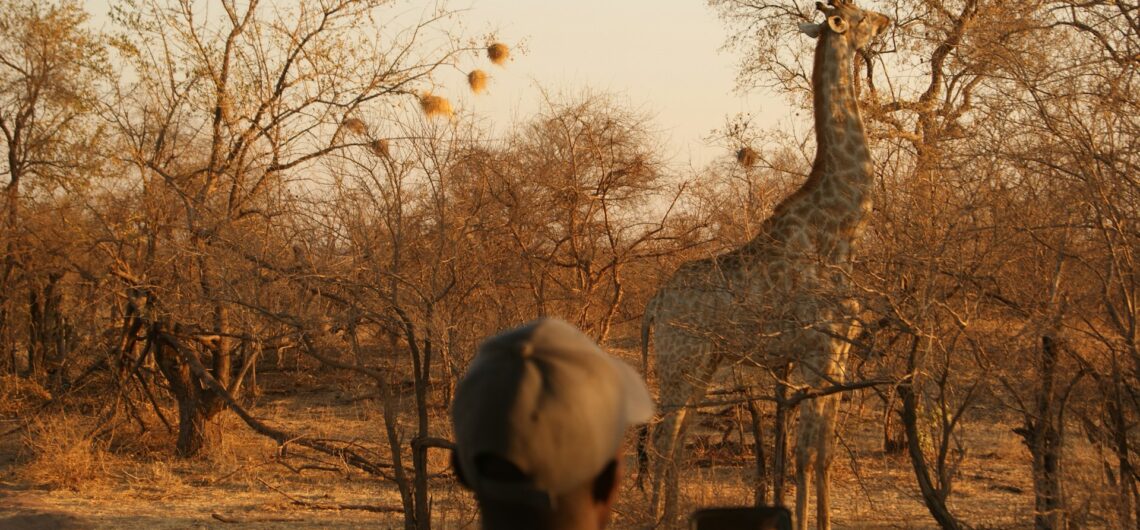
Zimbabwe safaris include those sought-after wildlife sightings, those that are synonymous with an African safari, but they also include some of Africa’s best walking safaris, which are a must for those who want to take in the abundant beauty of Zimbabwe’s landscapes.
If you are about to set out into this wild, ancient and sometimes wildly misunderstood place that has seen its fair share of trials and tribulations but has somehow managed to pull itself back together, we have a guide that you can use to prepare for what we promise will be one out of this world trip.
Can you see the Big 5 in Zimbabwe?
Zimbabwe is one of Africa’s most authentic safari destinations, even though it does slip under the radar and is often overshadowed by better-known places like the Kruger National Park.
The Big 5 (lion, leopard, elephant, rhino, and buffalo) can be seen all throughout the country’s national parks but not exactly all in one location. You might have to visit a couple of national parks to see them all in one Zimbabwe safari trip.
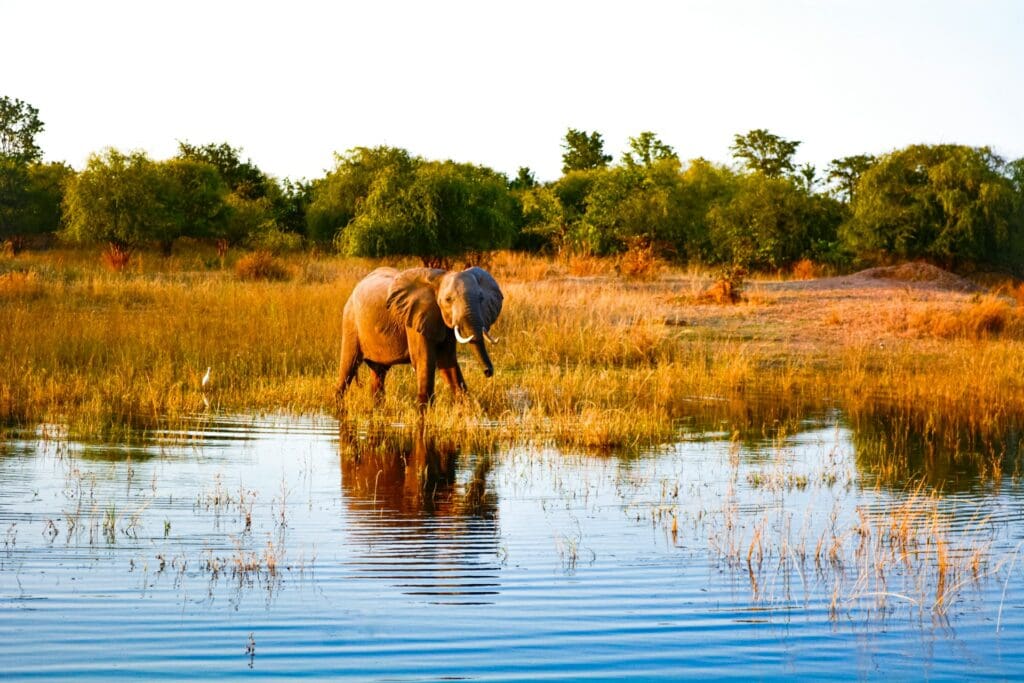
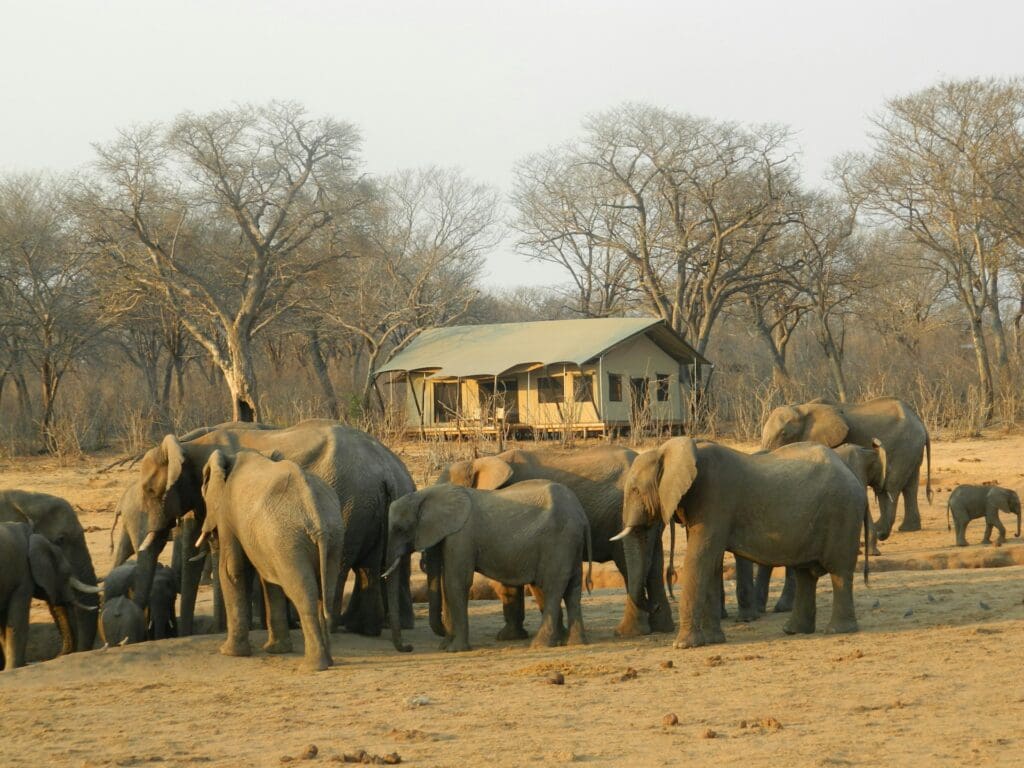
Hwange National Park, in particular, is renowned for its elephant populations, which is one of the largest in the world. It’s not unusual to sit quietly at a waterhole and see hundreds of elephants arrive in waves, and their social interactions are quite the sight to see, especially when there are newborns in the mix.
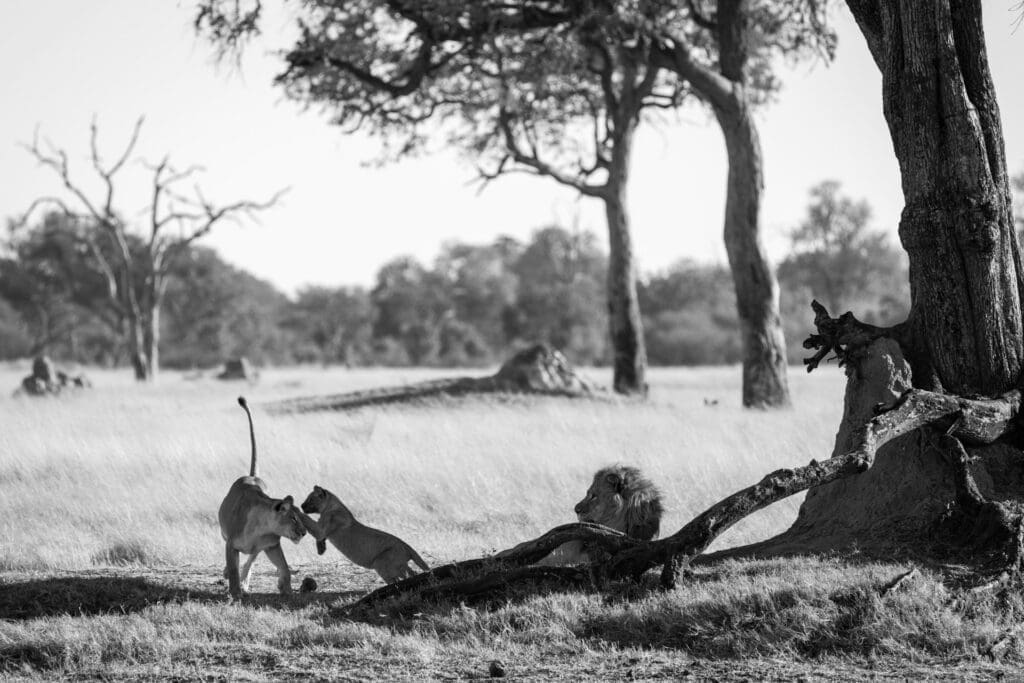
This park is also home to lion, buffalo, rhino and leopard, making it one of the few parks where you can see all of the Big 5 in one place, although spotting them all during a single Zimbabwe safari is easier said than done.
While sightings of elephant and buffalo in Hwange are extremely common, and lions are also quite easy to spot, leopards are not at all common and sightings of rhino are exceptionally rare as they have been poached into scarcity.
If you hope to see rhinos, your best chance is in Matobo National Park, where black and white rhinos are carefully protected. The experience of tracking them on foot under the guidance of one of the park’s expert guides is one of the most enjoyable activities, with the suspense of possibly walking around the corner and spotting one, keeping the enthusiasm high.
What are the key destinations in Zimbabwe?
Zimbabwe has a couple of key destinations, and not all of them are safari-focused.
It is an all-round holiday destination that will keep you entertained and leave you enlightened.
Since this is a guide to the Zimbabwe safari, we’re going to specifically look at the key places where you can go on a game drive to see the wildlife:
Hwange National Park
Hands down the best wildlife park in Zimbabwe, Hwange is also the largest national park in Zimbabwe, and home to over 100 species of mammals, including the Big 5. Situated on the border of Botswana, in western Zimbabwe, Hwange covers a massive 14 600 square kilometres, making it about the size of Belgium.
It’s particularly well-known for predator sightings alongside its immense elephant herds (there’s over 40 000 in the park).
Mana Pools National Park
A UNESCO World Heritage Site, Mana Pools National Park can be found high up along the border between Zimbabwe and Zambia, along the Zambezi River.
Walking safaris here are hugely popular, and the park is also famous for sightings of elephants, which can sometimes be spotted standing on their hind legs to reach delicious acacia pods.
This is the most remote place for a Zimbabwe safari, but the drive to the north of the country will be well worth the time you spend on the road.
Matobo National Park
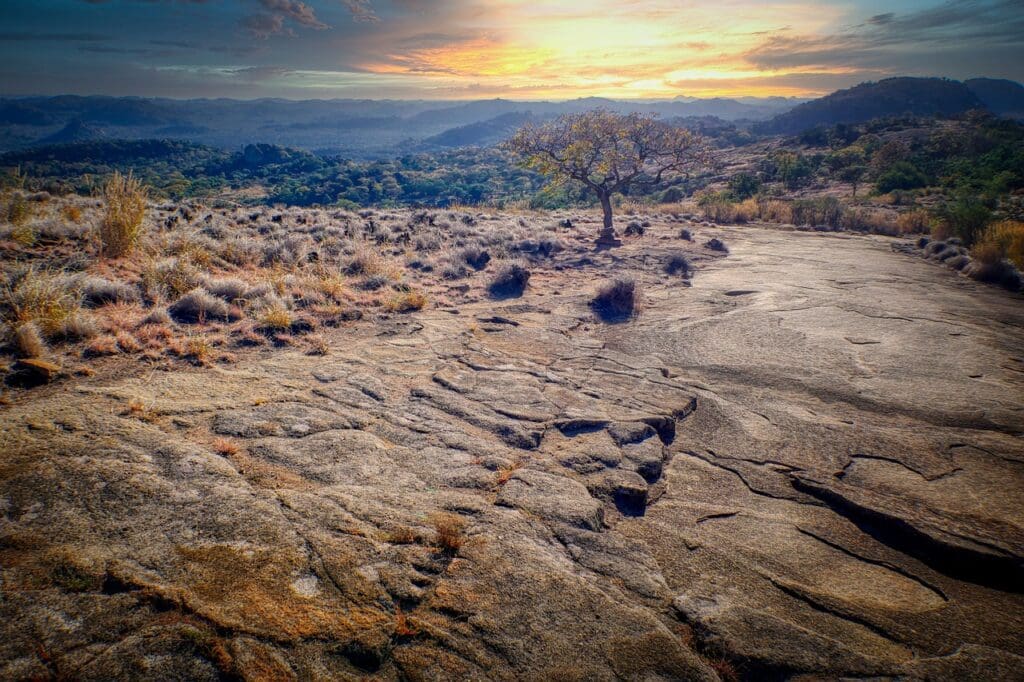
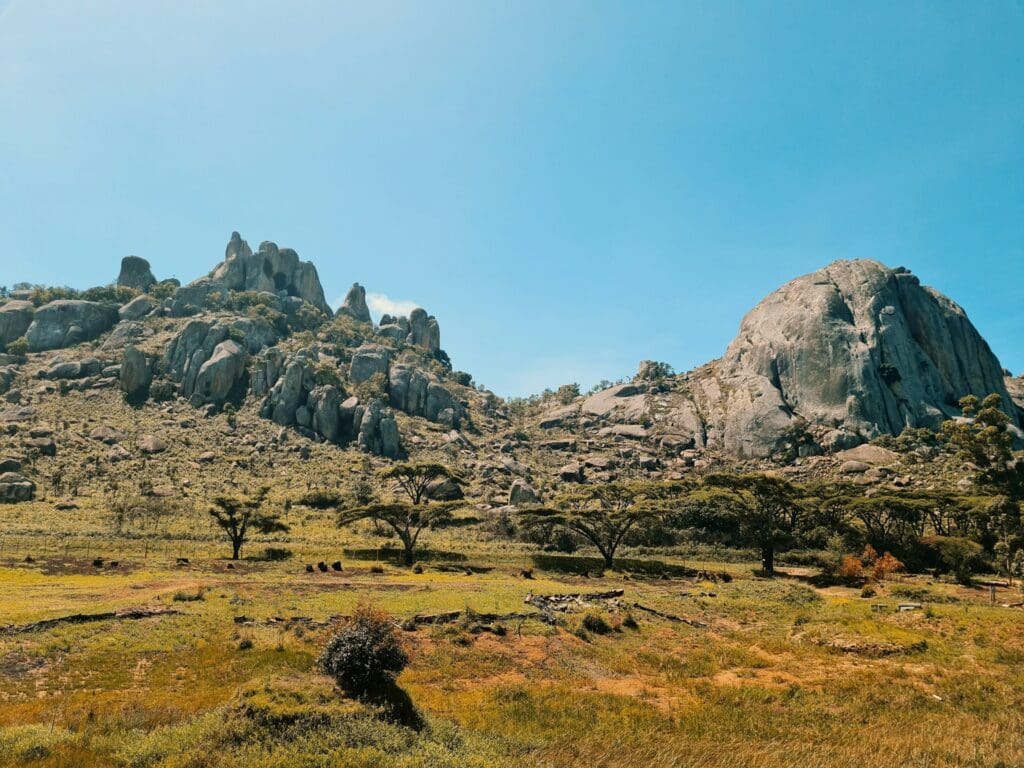
If you want to see the famous balancing rocks that feature on Zimbabwe’s currency, Matobo National Park, which means “bald heads”, quite apt when you see the rocks for the first time, is where you need to go.
Matobo will give you an incredible experience that will have you feeling reconnected to the earth. It is a deeply spiritual place, and while walking here, you might spot rock art.
The park also has a few historical attractions, such as the graves of Cecil Rhodes and the members of the Shangani Patrol who were killed in the First Matabele War.
Matusadona National Park
Set on the shores of Lake Kariba, and named after the Matusadona Hill, this is a place of water, wildlife and spectacular wilderness.
The park is ideal for both boating and traditional game drives, and you’ll likely see lion, buffalo, elephant, impala, waterbuck, hippo and more while travelling through the area. If you are lucky, you’ll even see wild dogs.
The park is also just the place to go fishing or to walk one of the beautiful trails.
The Victoria Falls
Zimbabwe is best known for being home to the Victoria Falls. It is one of the world’s largest waterfalls, and it forms a boundary between Zimbabwe and Zambia. There are times of the year when the falls are an unimpressive trickle, but if you happen to visit soon after the floods, the falls are magnificent to behold!
As for wildlife, the falls sit alongside the Victoria Falls Rainforest Park, where you can spot baboons, bushbuck, mongoose, and other critters and creatures.

What are safari activities you can enjoy in Zimbabwe?
While game drives are the backbone of any Zimbabwe safari, they are just the beginning of your holiday here.
Zimbabwe is known for its professional guiding tradition, which is widely regarded as one of the finest in Africa.
This means you’ll gain not just sightings, but stories, insights, and a deeper understanding of the ecosystems around you, and this is what puts the Zimbabwe safari well above the more conventional experience.
Safari activities that you can enjoy include:
- Walking safaris, especially in Mana Pools and Matobo, where you can feel the crunch of dry earth underfoot as you trace fresh animal tracks.
- Canoe trips along the Zambezi that will give you a perspective that feels both tranquil and intensely alive. With the hippos surfacing nearby, while fish eagles wheel above, the whole experience is made to feel intimate, especially as only a few guests take to the river at a time.
- Night drives, where you’ll get to see the various parks’ nocturnal residents, which include bushbabies and owls.
- Rhino tracking, which is possibly the most humbling experience, which will allow you deep insight into Zimbabwe’s conservation efforts.
When is the best time to visit Zimbabwe on safari?
As with all of Africa’s wildlife holiday destinations, there are better times of the year than others to have a Zimbabwe safari.
The dry season, from May to October, is generally considered the best period.
During this time of the year, the wildlife congregates around water sources, the vegetation thins out almost completely, and wildlife sightings become far easier than they are during the intense summer months when there are more water sources and the bush is thicker.
From August through to October, you’ll be able to take the best photos, as the golden light and dramatic dust-filled sunsets create an almost cinematic atmosphere. The rains tend to start returning from mid to late October.
Although the dry season is best for a Zimbabwe safari, the green season (November to March) is also quite a special time to travel.
During these months, the landscapes simply burst into colour, the birdlife returns in spectacular fashion, and the parks are a lot quieter, as there are fewer guests visiting.
Yes, the rain showers can become a bit too much, especially if you happen to visit during an intense flood season, but the rains do bring life and a different sense of beauty. If you are looking for solitude and a more contemplative pace, planning your Zimbabwe safari for the green season can be immensely enchanting.

Is a Zimbabwe safari safe?
Safety is a natural concern when planning any kind of travel and Zimbabwe has certainly seen its share of safety problems in the past.
Today, however, for visitors, Zimbabwe is considered safe to travel through, and the safari circuit in particular is considered secure and well-managed, even more so when you are travelling in the company of a tour operator.
As for your accommodation, the lodges and camps, especially those included in a guided Zimbabwe safari, are run by experienced professionals. Safari guides are also expertly trained and highly experienced.
The country’s infrastructure is reliable enough to support travellers, although only those who are comfortable with the self-drive safari experience should do so.
Of course, you should always keep your common sense in mind, listen to your guide (and your gut), respect the wildlife, and follow the local advice.
Zimbabweans themselves are famously welcoming, and many visitors comment that the warmth of the locals stays with them as much as the wildlife sightings.
If you’ve been weighing up where to go for your next African safari, Zimbabwe deserves to be near the top of your list.
The parks are less crowded than many others in Africa, the guiding is exceptional, and the sense of connection, both to the land and the people, is profound.