Table of contents
- 1 What does the Cederberg constitute?
- 2 What is the Cederberg famous for?
- 3 What towns are in the Cederberg area?
- 4 Where is the Cederberg in South Africa?
- 5 What is the highest peak in the Cederberg?
- 6 What animals are in the Cederberg?
- 7 Where does the name Cederberg come from?
- 8 What is the climate of the Cederberg?
Enhance your reading experience—immerse yourself in the adventure with our audio version. Click play and let the sounds of Africa captivate you!
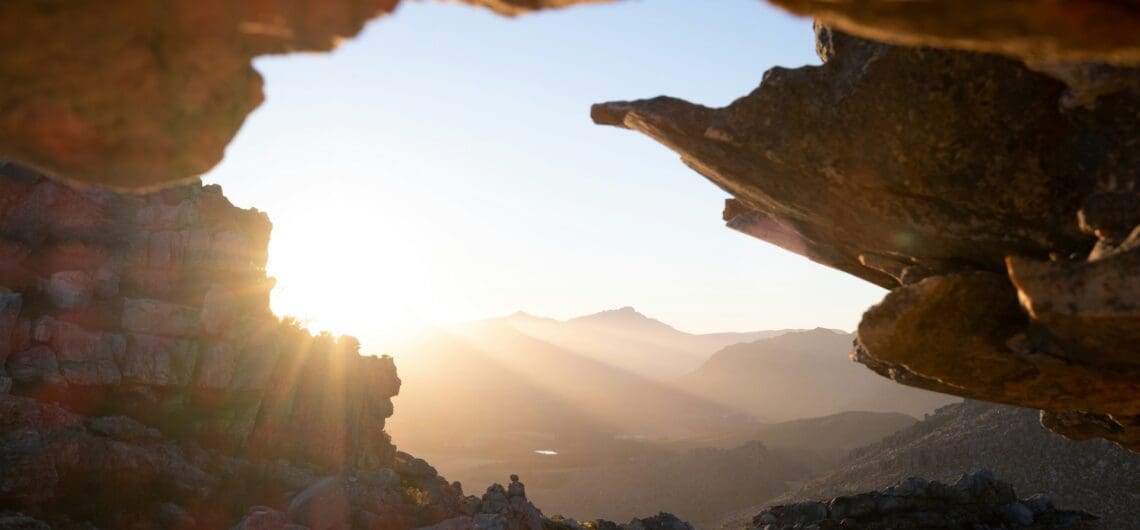
In the hush before dawn, a faint glow touches sculpted sandstone cliffs and ancient landscapes that beckon you to stop a while. Here, where the air smells faintly of fynbos and the sky stretches wide, lies the Cederberg, a place that will quietly change you.
The Cederberg is not your typical tourist destination.
Just a few hours north of Cape Town, this part of the beautiful Western Cape is characterised by ochre stone surfaces, stunning mountains, spectacular rock formations, and wildflower-sprinkled slopes, which are best seen in August and September, after the nourishing winter rains cause the springtime flowers to bloom.
The Cederberg hums with stories of ancient peoples and botanical wonders, under skies so clear that at night you’ll count the constellations until you drift to sleep.
It is a place that is packed full of geological attractions, home to hiking trails, some of which are an easy afternoon walk, while others are a little more punishing, and it is quietly famous for its abundance of San rock art, most of which are such a closely guarded secret that the locations are known only to a select few, those who move in archaeological circles.
The Cederberg is a destination best suited to those looking for an off-the-beaten-track experience.
If your idea of a holiday has much to do with hiking, splashing in rivers and through streams, sitting on rocks and examining the last of the world’s sandveld flowers, and walking the very land South Africa’s very first inhabitants once lived and hunted on, the Cederberg is where you want to go and it will go far beyond your expectations.
All throughout the area, you can stay in quaint farmhouses, built in the 1800s, perhaps a few built even before then, that are far removed from the bright city lights of Cape Town.
With a kerosene lamp and a fire place, you can easily forget about the world and fall into a ghost story on a blustery winter’s night, or, during the long and dry summer months, you can sit outside, gazing up at the stars, taking in the sheer magnitude of being alive at this time, and in this utterly enchanting place.
What does the Cederberg constitute?
The Cederberg is essentially a mountain range that you will find roughly 250 km (about 2 and a half hours’ drive) north of Cape Town.
The mountains stretch from Pakhuis Pass in the north to Grootrivier in the south, spanning about 182 000 hectares of some of South Africa’s most dramatic terrain.
Over millennia, wind and water have carved the area’s sandstone into whimsical forms which include arches, caves and crags that are not only intriguing to look at but which also harbour ancient San rock art.
Some of the art can be easily seen, while others have not been publicly catalogued, so if you stumble upon them during a hike, treat them with respect.
What is the Cederberg famous for?
The Cederberg might not be South Africa’s most popular attraction, but those who live in the area and travel it often, as well as those who’ve been on a Western Cape tour, understand precisely why the area is so special.
The area is a great destination for hikers, and it is famous for:
- Rock art created by the San and Khoi peoples, which has been found inside caves and overhangs, and includes images dating back thousands of years.
- Iconic sandstone forms like the Wolfberg Arch, Maltese Cross, Stadsaal Caves and Lot’s Wife.
- Rich botanical life within the Cape Floral Region, including fynbos, endemic Clanwilliam cedar, and the high-altitude snow protea.
- Numerous streams and waterfalls, tucked into valleys, such as those along the Sevilla Rock Art Trail and Middelberg Waterfall. These places will give you unexpected but most welcome water refuges in the dry landscape, especially if you are walking through the area on a hot summer day.
- The hush of star-filled nights, where the Milky Way arcs above sandstone and silence speaks volumes.

What towns are in the Cederberg area?
The Cederberg Local Municipality, which includes the dramatic Cederberg Mountains down to the windswept Atlantic coast, is home to a collection of unique towns, each with its own character and story.
Clanwilliam, one of South Africa’s oldest towns, is a must-visit for history buffs and nature lovers alike. Known as the rooibos tea capital, when visiting this town, you’ll see old colonial architecture, you can visit all sorts of local markets, and have easy access to the Cederberg Wilderness Area, where hiking trails and ancient rock art await.
Just down the Olifants River valley lies Citrusdal, a lush agricultural town that is most famous for its citrus orchards. The town’s serene setting and warm hospitality make it a perfect base for exploring nearby hot springs and for going on a few mountain adventures.
For those drawn to the cool water and sea breezes, Lamberts Bay, with its fresh seafood, energetic surfing scene, and the unforgettable spectacle of Bird Island, which is a haven for gannets and other seabirds, is just the place to go. Nearby, Elands Bay is another town worth visiting. It is known for its world-class waves and laid-back vibe, ideal for surfers and beachcombers looking for peace and quiet.
If you travel further inland, you’ll stumble upon smaller settlements like Graafwater and Leipoldtville, where you will be treated to a glimpse of Cape rural life, with the latter named after the beloved South African poet C. Louis Leipoldt, who is buried in the area. You also don’t want to miss Wupperthal, a historic missionary village where time seems to stand still, and where you will see traditional thatched cottages and learn about the town’s rich Moravian heritage.
The last small town worth visiting is Paleisheuwel, a lesser-known place that fully embodies the quiet character of the Cederberg’s rural heartland.

Where is the Cederberg in South Africa?
Positioned in the Western Cape, the Cederberg lies some 250–300 km north of Cape Town.
As you drive out of Cape Town, leaving Table Mountain in your rear view mirror, the change in the landscape is the first thing that will tell you that you are on your way to some place extra special. Geographically, it marks the dramatic shift from flatter coastal plains into towering, silent mountains.
There is also a cultural shift that you will experience as you head to the Cederberg, but that’s for another conversation.
Cederberg is not exactly a singular destination. If you look at the area on a map, you’ll see that it covers a huge section of the Western Cape and collectively that area falls under the Cederberg Municipality.
To get to the Cederberg, you’ll need to take the N7, or you can access the area from Ceres or from Wupperthal, going through the Koue Bokkeveld side, where you will be driving on a good gravel road.
If you are taking the N7 route, when you are about 28km from Citrusdal or Clanwilliam, you will soon see the Cederberg turn-off.
What is the highest peak in the Cederberg?
The name Cederberg means Cedar Mountain, which tells you more or less what you can expect when you make your way through the area: cedar trees and endless mountains.
The highest peak in the area is the Sneeuberg, which rises to about 2 026 metres (6 647 feet).
And you can climb it!
There are hiking trails like the Sneeuberg route and the multi-day Sneeuberg hike that can be quite a challenge, but when you get to the top, you’ll be rewarded with the most incredible, sweeping panoramas, and, if timed right in winter, you will also be able to see the fragile snow protea in full bloom.

What animals are in the Cederberg?
Although the landscape looks quite dry and during the summer even desolate, you can expect to see quite a few interesting, albeit shy, creatures, such as:
- Cape leopard (smaller than its counterparts) can be seen roaming Cederberg’s mountains.
- Caracals are often spotted in the rocky outcrops.
- Aardwolves are common in the region’s open areas.
- Cape Clawless Otters are found near rivers and wetlands, particularly around the Olifants River.
- Chacma Baboons are widespread and often seen in troops foraging in the mountains or valleys.
- Klipspringers are adapted to rocky terrains and are recognisable by their distinctive “rock-jumping” gait.
- Grey Rhebok can be found in grassy slopes and fynbos areas.
- Duiker and Grysbok thrive in the dense fynbos and forested areas.
- Porcupine and Aardvark are occasionally spotted in the region’s quieter areas.
- Cape Sugarbird and Orange-breasted Sunbird, both endemic to the fynbos biome.
- Verreaux’s Eagle, Jackal Buzzard, and Peregrine Falcon are often spotted soaring above the cliffs.
- Cape Gannets, African Penguins, and cormorants, especially at Bird Island.
- Cape Rockjumper, Ground Woodpecker, and various larks and pipits.
- A variety of reptiles, including agamas, geckos, and puff adders. The Cape mountain toad and other amphibians are found near streams and seasonal pools.
- Tortoises, like the Angulate Tortoise, are common in the fynbos.
In coastal towns like Lamberts Bay and Elands Bay, you may spot Cape fur seals, dolphins, and seasonal southern right whales along the shore.
You will also see all sorts of butterflies and other insects.

Where does the name Cederberg come from?
The name comes from the Clanwilliam cedar tree (Widdringtonia cedarbergensis), a rare conifer native to this area, with its roots literally naming the hills that cradle it. The word “berg” is Afrikaans for mountain, of which you will see plenty!
What is the climate of the Cederberg?
You’ll encounter seasonal extremes that shape this landscape, and that will also influence when you plan your trip.
Summers can scorch, tipping into the 40 °C range, while winter nights may fall below freezing, even bringing snow atop Sneeuberg, appropriate considering the name means Snow Mountain.
Rain primarily falls in winter, and the rest of the year remains largely dry, creating perfect conditions for the fynbos and desert-adapted succulents.

If your soul longs for a place miles from noise, the Cederberg is where you will find it.